
Zippit® mundtape


 Checkout with



Choose your favorite Zippit product and start breathing better today.
🚚 Free shipping on all orders · 🎁 free nasal strips from $40.00 · free storage box from $75.00

 Free shipping on all orders60-day moneyback guaranteeSecure checkout

Do you often breathe through your mouth without realising it? You're not alone—but this simple habit might be affecting your lung function more than you think.
TLDR: Mouth breathing can reduce lung function by up to 20% in people with mild asthma and increases your risk of respiratory problems. Nasal breathing filters air, optimises oxygen uptake, and supports healthier lung volume and airway function. Switching from mouth to nasal breathing strengthens your respiratory system and improves overall breathing efficiency.
Understanding how your breathing method impacts your lungs can help you make better choices for long-term respiratory health.

Mouth breathing bypasses the natural filtration system in your nose, allowing unfiltered air to reach your lungs directly. This increases exposure to allergens, pollutants, and pathogens that can irritate your airways.
Research published in Respirology demonstrates that enforced mouth breathing decreases lung function in people with mild asthma, triggering symptoms even at rest. The study found measurable drops in airway capacity when participants breathed through their mouths instead of their noses.
When you breathe through your mouth, air enters the lungs cooler and drier than it should be. Your nasal passages normally warm and humidify air to 37 degrees Celsius with 95% humidity before it reaches your lungs. Without this preparation, your airways can become irritated and inflamed.
Reduced oxygen uptake: Mouth breathing lowers the efficiency of oxygen absorption in your lungs
Increased airway resistance: Bypassing nasal filtration can cause inflammation and narrowing of airways
Lower lung volume: Chronic mouth breathing is associated with reduced respiratory capacity over time
A community-based cohort study published in Allergology International found that 17% of the population reported mouth breathing, and this habit was independently associated with asthma morbidity. The data showed clear connections between breathing method and respiratory health outcomes.
Your nose is designed as a sophisticated air conditioning system for your lungs. Every breath through your nose is filtered, warmed, and humidified before reaching your airways. This preparation protects lung tissue and optimises oxygen exchange.
Nasal breathing also produces nitric oxide in your sinuses—a molecule that dilates blood vessels and improves oxygen uptake by 10 to 20%. This means your lungs work more efficiently with every breath, delivering more oxygen to your tissues with less effort.
Research from Journal of Clinical Medicine analysed the posture and pulmonary function of mouth-breathing children compared to nasal breathers. The findings showed that nasal breathers demonstrated significantly better pulmonary volumes and respiratory mechanics.

| Aspect | Mouth Breathing | Nasal Breathing |
|---|---|---|
| Air filtration | None—direct exposure to pollutants | Filters 99% of particles larger than 10 microns |
| Air temperature | Cool and dry | Warmed to 37°C with 95% humidity |
| Oxygen uptake | Reduced efficiency | 10-20% more efficient |
| Lung function impact | Can decrease by up to 20% in asthmatics | Maintains optimal lung capacity |
| Airway protection | Increased inflammation risk | Natural defence against irritants |
When you breathe nasally, your diaphragm engages more effectively, creating negative pressure that allows your lungs to expand fully. This maximises lung volume and ensures efficient gas exchange in the alveoli—the tiny air sacs where oxygen enters your bloodstream.
Mouth breathers typically take faster, shallower breaths than nasal breathers. This increases breath frequency but decreases breathing efficiency. Rapid, shallow breathing activates your stress response and can create a cycle of anxiety and poor oxygenation.
A study in the Journal of Applied Physiology examined how oral breathing affects respiratory patterns. Researchers found that mouth breathing altered the rhythm and depth of respiration, changing how the thoracic wall moved during breathing cycles.
Proper breathing technique involves slow, deep breaths through the nose that fully engage your diaphragm. This pattern signals safety to your nervous system and promotes parasympathetic activation—the rest and digest state that supports recovery and health.
Optimal breath frequency: Eight to twelve breaths per minute for adults at rest
Diaphragmatic engagement: Nasal breathing naturally activates proper breathing muscles
CO2 tolerance: Nasal breathing helps maintain healthy carbon dioxide levels for optimal oxygen delivery
Want to learn more about the broader health impacts? Read our guide on nasal breathing vs mouth breathing for your health and immunity.
Transitioning to nasal breathing takes awareness and practice, but the benefits for your lungs and airways are immediate. Start by paying attention to your breathing throughout the day—especially during activities like working at a desk or watching television.
During sleep, Zippit mouth tape gently encourages nasal breathing by keeping your lips together. This simple tool helps retrain your breathing pattern overnight, when unconscious mouth breathing is most common. Users report waking up more refreshed with less dry mouth and better energy levels.
If nasal congestion makes breathing through your nose difficult, nasal strips from Sniffit can help. These strips mechanically lift your nasal passages, increasing airflow by up to 30% without medication. They're particularly useful during allergy seasons or when recovering from a cold.
Practice conscious nasal breathing: Set reminders throughout the day to check if you're breathing through your nose
Try breathing exercises: Box breathing (four counts in, hold four, out four, hold four) trains nasal breathing patterns
Address congestion: Use saline rinses or nasal strips to clear airways before bed
Use mouth tape at night: This gentle reminder keeps you breathing nasally during sleep
Monitor your progress: Notice improvements in sleep quality, energy, and daytime focus
For more practical guidance, explore how mouth breathing affects your lifestyle and habits.
Specific breathing exercises can strengthen your respiratory muscles and improve lung capacity. Diaphragmatic breathing, also called belly breathing, teaches your body to use the full capacity of your lungs rather than shallow chest breathing.
To practice diaphragmatic breathing, lie on your back with one hand on your chest and one on your belly. Breathe in slowly through your nose for four counts, feeling your belly rise while your chest stays relatively still. Exhale through your nose for six counts. This exercise trains proper breathing mechanics and increases lung volume over time.
Alternate nostril breathing is another technique that balances airflow through both nasal passages. This practice, borrowed from yoga traditions, helps clear airways and promotes calm, efficient breathing. Research shows it can reduce stress hormones and improve respiratory function markers.
Box breathing: Four-count inhale, hold, exhale, and hold cycle through the nose
4-7-8 breathing: Inhale for four, hold for seven, exhale for eight—all through your nose
Pursed lip breathing: Helps if you have respiratory conditions by keeping airways open longer
Key Takeaway: Regular breathing exercises strengthen your diaphragm, increase lung capacity, and reinforce nasal breathing habits—all supporting better respiratory health.
While switching to nasal breathing improves lung function for most people, some breathing difficulties require professional evaluation. If you experience persistent breathlessness, wheezing, or chest tightness, consult a respiratory specialist or your GP.
Structural issues like a deviated septum, enlarged turbinates, or nasal polyps can make nasal breathing difficult or impossible. An ear, nose, and throat (ENT) specialist can diagnose these conditions and recommend treatments ranging from medication to minor surgical procedures.
Chronic mouth breathing in children deserves particular attention, as it can affect facial development and dental alignment. If your child consistently breathes through their mouth, especially during sleep, consult a paediatrician or ENT specialist. Early intervention can prevent long-term complications.
Learn more about when to see a GP, specialist or therapist for mouth breathing.
Ready to support your lungs and airways? Start with simple changes like conscious nasal breathing during the day and mouth tape from Zippit at night. Your respiratory system will thank you with better oxygen delivery, stronger lung function, and easier breathing every day.
Mouth breathing vs nasal breathing: how do they affect your lungs and airways?
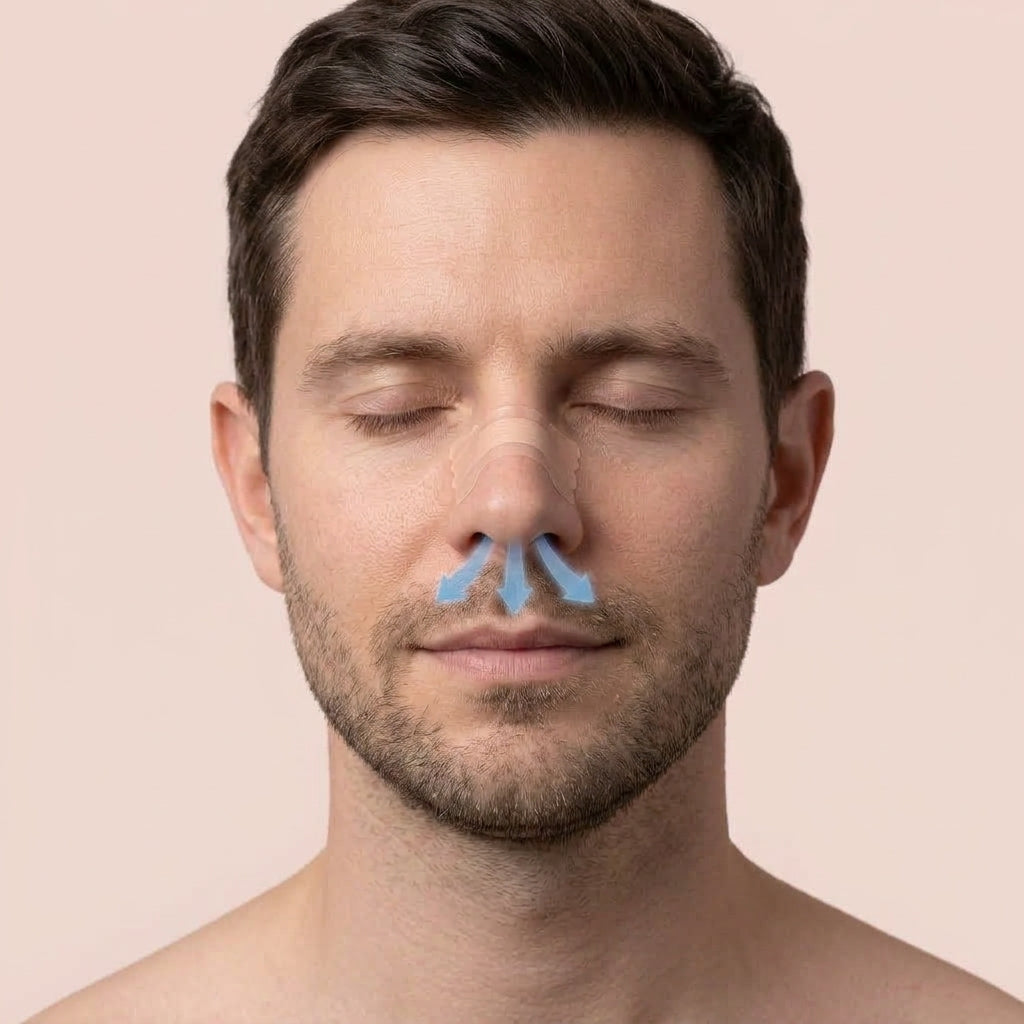
Nasal breathing vs mouth breathing: which method supports your lungs and airways best?
Discover how nasal breathing improves oxygen uptake by enhancing CO2 balance, reduces water loss by 42%, and supports optimal lung function compared to mouth breathing.

How to use nasal breathing to boost your athletic performance: a practical guide
Learn how to switch to nasal breathing during training to boost endurance, improve oxygen efficiency, and enhance athletic performance with this step-by-step guide.

